
Top-rated roofing advice · 4.9 on Google
Roofing Materials
& Options Compared
Compare the roofing materials we install, tile, architectural shingle, standing seam metal and polyurethane foam, side by side. Ocean Seven Builders helps you choose the best roof for your home’s shape, structure, style and budget.
- Licensed & insured · CSLB #893048 · B-General · C-39 Roofing
- In-house roofing crews
- Honest material advice

Foam roof on a modern home by Ocean Seven Builders
Roofing materials
Choosing between roofing materials starts with your roof.
There is no single best roof for every house. The right choice among roofing materials depends on the shape and pitch of your roof, the weight your structure can carry, the style of the house and how long you plan to stay. A material that is perfect for a Spanish-style home with a steep roof can be the wrong choice for a modern house with a nearly flat one.
This page compares the roofing materials we install: clay and concrete tile, architectural asphalt shingle, standing seam metal and seamless polyurethane foam. For each one, we explain where it works best, what it needs from the structure, and what drives its cost. Because we install all four, our advice is not tied to selling one particular product.
For a recommendation on your own home, start with a roof inspection. We look at the roof shape, the framing and the existing materials, then explain which options make sense. Our article on choosing the best roof covers the decision in more depth.
- Clay and concrete tile
- Architectural asphalt shingle
- Standing seam metal
- Seamless polyurethane foam for flat roofs
Roofing materials explained
A homeowner’s guide to roofing materials.
Clay and concrete tile
Tile is the traditional roof of Spanish, Mission and Mediterranean homes, and it remains one of the longest-lasting roofing materials. Clay tile keeps its color for a very long time, while concrete tile offers more shapes, including flat profiles, often at a lower price. Both are heavy, so the framing must be designed or checked for the load. It is also important to remember that the underlayment beneath tile wears out long before the tile itself. Our tile roofing page explains how we renew it.
Architectural asphalt shingle
Architectural shingle is the most widely used roofing material for pitched roofs. It is made from layered asphalt mats with mineral granules, which create a dimensional look with depth and shadow. Shingle suits a wide range of styles, works on complex roofs with many valleys and dormers, and is light enough for almost any structure. It is also generally one of the more affordable options. Learn more on our shingle roofing page.
Standing seam metal
Standing seam metal uses long panels joined by raised seams, with the fasteners hidden underneath. It gives modern homes crisp, continuous lines and can be installed on lower slopes than shingle or tile. Metal is lightweight and durable, and reflective finishes help reduce heat gain. It costs more than shingle and looks best on roofs with long, simple planes. Our metal roofing page explains the details.
Polyurethane foam for flat roofs
Flat and low-slope roofs need a different approach, because water sits on them longer. Spray polyurethane foam forms a seamless, fully adhered layer that wraps around edges and penetrations, and it can be built up to improve drainage. A protective coating shields the foam from the sun and is renewed periodically. Foam also adds insulation to the roof. It is our specialty for flat roofs, and our flat roofing page covers it in depth.
Weight, slope and structure
The two factors that rule out materials most often are roof slope and structural capacity. Tile and shingle need enough pitch to shed water, so they are not suitable for nearly flat roofs. Tile also needs a structure built to carry it. As a result, switching from shingle to tile can involve engineering and framing work, while switching from tile to a lighter material is usually straightforward. We check both before recommending a change.
Looks, lifespan and budget
Once the technical limits are clear, the choice comes down to appearance, lifespan and budget. A premium material makes most sense if you plan to stay in the house long enough to benefit from it, while a quality shingle roof can be the best value for many homes. Our roof replacement and new roof installation pages explain how each project is carried out once you have chosen.
Related roofing services
Talk with a professional
Get honest advice and a fixed, line-item proposal from a top-rated team.
Questions to ask
How to choose the right roofing material.
These are the questions we work through with homeowners when choosing a roofing material. The answers usually narrow the options quickly.
What is the roof pitch?
Tile and shingle need a minimum slope, metal suits lower slopes and foam is designed for flat roofs.
What can the structure carry?
Tile is heavy; shingle, metal and foam are much lighter.
What style is the house?
Spanish homes suit tile, traditional homes suit shingle and modern homes suit metal or foam.
How complex is the roof?
Many valleys and dormers favor shingle; long, simple planes favor metal.
How long will you stay?
Premium materials make most sense when you will enjoy their lifespan.
What does the neighborhood look like?
Matching the character of nearby homes can matter for appearance and value.
Are you adding solar?
Some roofs make solar mounting simpler than others.
What is the budget?
Material, structure and installation complexity all affect the cost.
Still unsure? Our roof inspection answers these questions for your home. If the roof is leaking now, start with roof leak repair.
What every roof needs
What every roofing system needs underneath.
Whatever material you choose, the layers beneath it decide how long it lasts. These are the parts of every roof we install.
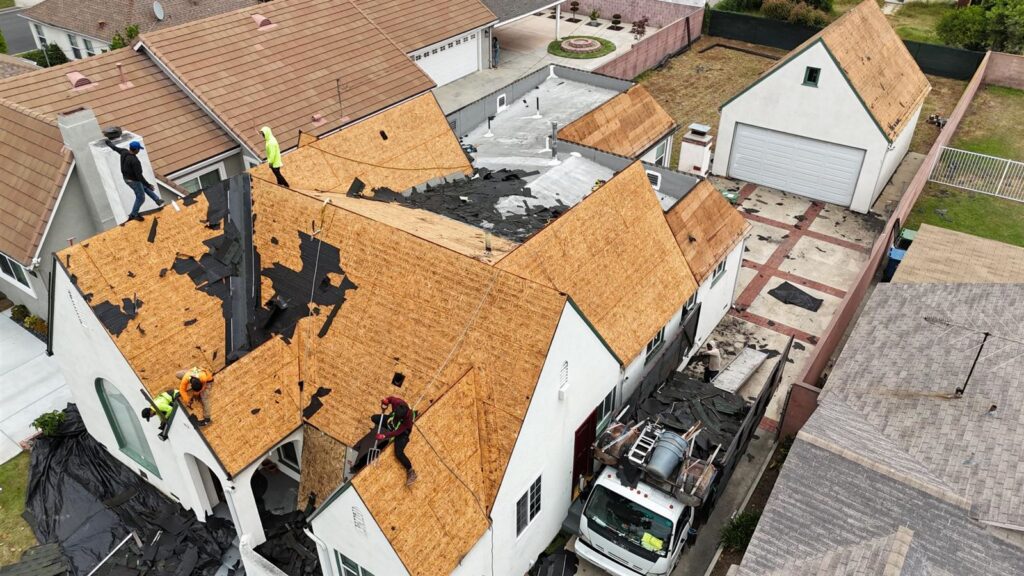
Our crew installing new decking on an Ocean Seven re-roof
Sound decking
Every roofing material needs a solid deck. Damaged decking is replaced before the new roof goes on.
The right underlayment
Tile, shingle and metal each need underlayment suited to them, installed across the whole deck.
Flashing at every transition
Walls, chimneys, valleys, skylights and vents need flashing designed for the roofing material.
Ventilation
Attics and roof assemblies need to breathe so heat and moisture do not shorten the roof’s life.
Drainage
Gutters, scuppers and drains must carry water away, especially on flat and low-slope roofs.
Proper fastening
Each system has its own fastening method, from tile battens to concealed metal clips.
Workmanship warranty
Every roof we install carries a written workmanship warranty, plus the manufacturer’s warranty.
The four systems
The roofing materials we install.
Each material has strengths and limits. Choose one to learn more about how we install it.
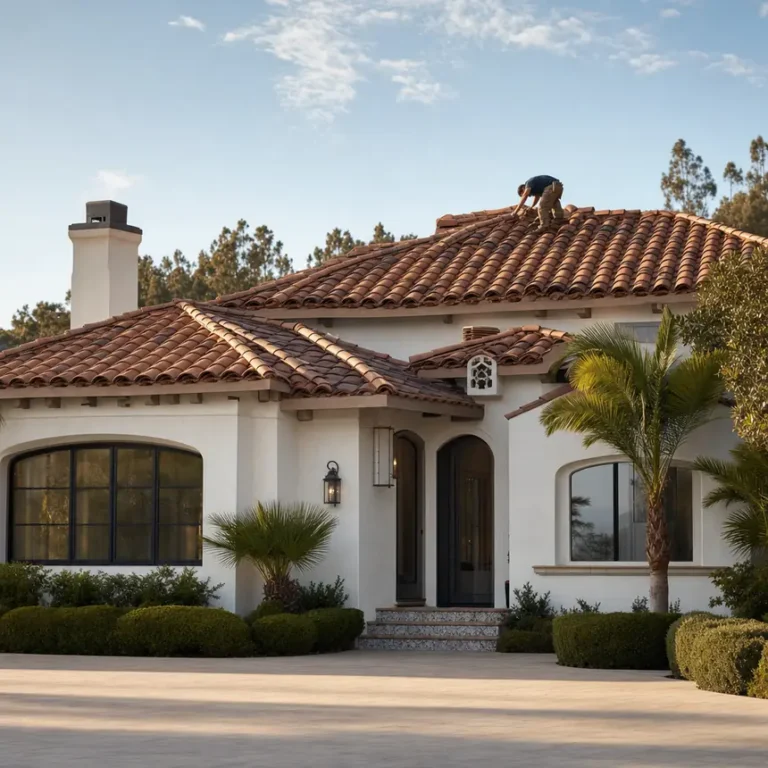
Classic and long-lasting, with a distinctive profile. Heavy, so the structure must be designed or checked for it.
Best for: Spanish and Mediterranean homes
Material reference image
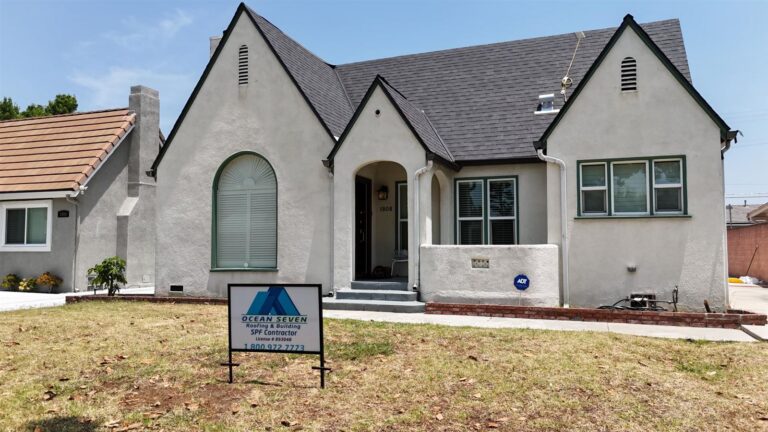
Versatile, lighter and available in many colors. Suits most pitched roofs, including complex shapes.
Best for: traditional and transitional homes
Ocean Seven project
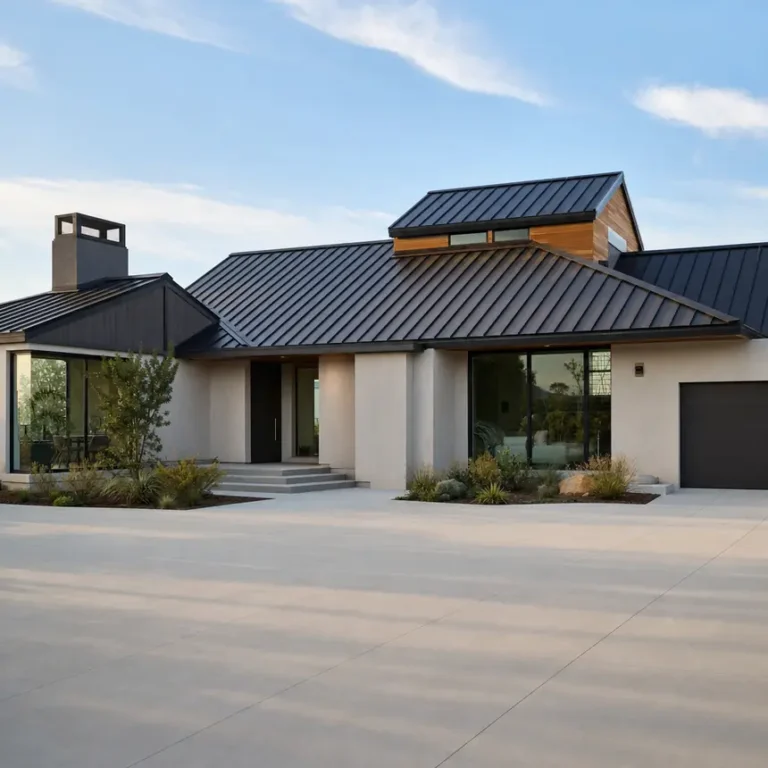
Clean lines and concealed fasteners, lightweight and suited to lower slopes.
Best for: modern architecture
Material reference image

Seamless, insulating and built up to drain. The strongest option for flat roofs.
Best for: flat and low-slope roofs
Ocean Seven project
How it works
How we help you choose a roof.
Five simple steps from the first conversation to a roofing material you are confident in.
Conversation
Tell us about the house, the roof and what matters to you: look, lifespan, budget or energy use.
Roof inspection
We check the roof shape, pitch, structure and existing materials on site.
Options & samples
We explain which materials suit your roof and show samples and photos of finished roofs.
Line-item proposal
You receive a fixed proposal for your chosen material, with each part of the work listed.
Installation
Our own crew installs the roof, from decking and underlayment to the final finish.
Comparing costs
What drives the cost of each roofing material.
Material price is only part of the cost. These are the factors that decide what a roof costs to install.
Material cost
Tile and metal generally cost more than shingle; foam is priced by thickness and coating.
Structure
Switching to a heavier material can require framing upgrades.
Roof shape
Complex roofs add cutting, flashing and labor for every material.
Tear-off
Removing the existing roof and repairing decking adds to any replacement.
Lifespan and maintenance
Some materials cost more up front but need less frequent replacement.
Energy performance
Reflective finishes and foam insulation can reduce heat gain.
Comparing fairly: we price the material you choose in a fixed, line-item proposal, and can price an alternative alongside it so you can compare like for like.
Why Ocean Seven
Why homeowners trust our roofing material advice.
Good advice comes from experience with every option. These are the reasons homeowners trust our recommendations.

We install all four
Tile, shingle, metal and foam are all installed by our own crews, so our advice is not tied to one product.
Structure checked first
We confirm the framing can carry the material before recommending it.
Honest recommendations
If a less expensive material suits your house better, we will tell you.
Licensed, bonded & insured
CSLB License #893048, B-General and C-39 Roofing. You can verify it with the Contractors State License Board.
What clients say
What homeowners say about their new roofs.
Selected excerpts from public Google and Yelp reviews of Ocean Seven Builders, quoted as written.
We had a traditional tile roof installed by Ocean Seven Builders a few months ago and the quality of work has been excellent. … They replaced damaged wood underneath the old roof, installed proper underlayment, and matched the tile color perfectly with the style of the house.
Sharon Rook
Google review · Tile roofing
Ocean Seven Builders did an amazing job replacing our asphalt shingle roof. … The workers were respectful, professional, and incredibly efficient. … Our roof now looks clean, modern, and solid.
Stephanie Redman
Google review · Shingle roofing
After looking at various roof choices and meeting many roofers, thank goodness I met Ron. He was really easy to deal with and explained everything really well.
Kenny MacPherson
Google review · Roof replacement
Homeowner guides
Roofing guides for homeowners.
Reading before you choose a roof: the best roof for your home, repair or replace, and flat roof leaks.
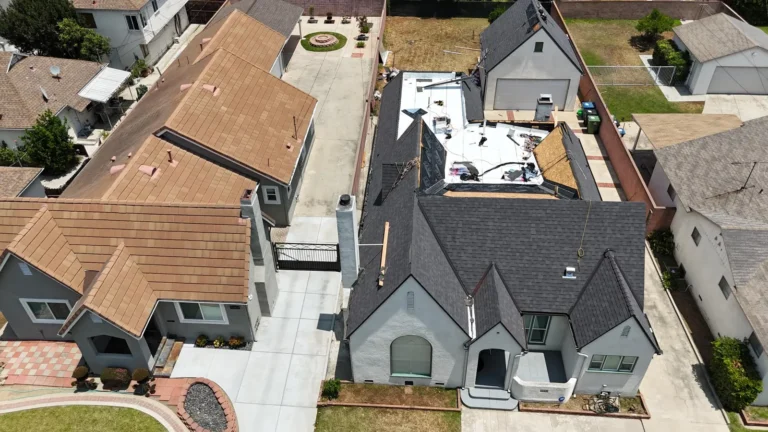
Roofing Guides
November 10, 2026

Roofing Guides
November 5, 2026
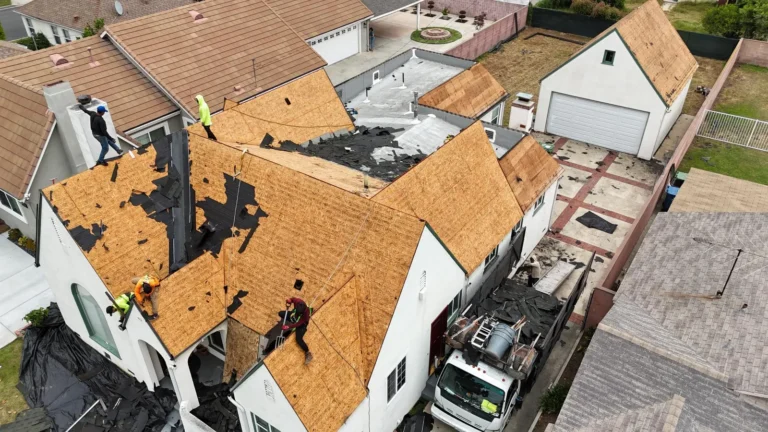
Roofing Guides
October 27, 2026
Roofing FAQ
Roofing questions, answered by professionals.
Repair or replace, which material, permits, leaks and warranties: straight answers from a roofing contractor that started as a roofing crew.
How do I know if my roof needs repair or replacement?
Isolated problems, such as a failed flashing or a small damaged area, can usually be repaired. However, when leaks keep returning, the underlayment has reached the end of its life, or the decking is soft in several places, replacement is normally the better long-term value. An inspection tells you which situation you are in. Learn more about roof repair and roof replacement.
What roofing materials do you install?
We install clay and concrete tile, architectural asphalt shingle, standing seam metal and seamless polyurethane spray foam for flat and low-slope roofs. Each suits a different roof shape and house style, so our guide to the best roof for Los Angeles homes and our page on roofing materials & options compare them.
What is a polyurethane foam roof?
Polyurethane foam is sprayed on as a liquid, expands into a seamless surface and is then protected with a coating. Because there are no seams to fail, it is well suited to flat and low-slope roofs where water would otherwise collect. It is the company’s roofing specialty.
How long does a roof replacement take?
It depends on the size of the roof, the system, the tear-off and the weather. As a guide, the company’s typical range for a polyurethane foam re-roof is two to five days. Your schedule is confirmed in the proposal after an inspection.
Do I need a permit to replace my roof?
In most Los Angeles-area cities, a roof replacement requires a permit and inspections. We coordinate the permit and inspections as part of the project. Our guide to home improvement permits in Los Angeles explains the process.
Can you find and fix a roof leak?
Yes. A ceiling stain is not always directly under the leak, because water travels along decking and framing first. We trace the source, which is often flashing, a roof penetration or a valley, and then repair it. See roof leak repair.
Do you offer roof inspections?
Yes. An inspection looks at the roof surface, flashing, penetrations, drainage and, where accessible, the decking and underlayment. It is also the first step before any repair or replacement proposal. See roof inspections.
Can you help with a roof insurance claim?
The company lists insurance claim work as part of its roofing service. We can inspect and document the damage and prepare a scope of repair. Coverage decisions, however, are made by your insurance company.
What happens if the wood under my roof is damaged?
Damaged decking is replaced before the new roof goes on, because a new roof is only as sound as what it is attached to. The proposal explains how decking replacement is handled so there are no surprises.
Can I switch from shingles to tile?
Often, yes. Tile is considerably heavier than shingle, though, so the roof framing has to be checked first and may need strengthening. We confirm this before you commit. Learn more about tile roofing and shingle roofing.
Do you work on flat and low-slope roofs?
Yes. Flat and low-slope roofs are a core part of the company’s roofing work, including seamless polyurethane foam systems. See flat & low-slope roofing.
What warranty comes with a new roof?
Every project carries a written workmanship warranty, along with the manufacturer’s warranty on the roofing system. Specific terms and periods are set out in your contract.
Where we work
Service areas across Los Angeles & beyond.
As a Los Angeles general contractor based in Van Nuys, we serve homeowners across Los Angeles County, Orange County, San Bernardino County and Marin County.
Los Angeles County
- Agoura Hills
- Alhambra
- Altadena
- Arleta
- Bel Air
- Beverly Glen
- Beverly Hills
- Brentwood
- Burbank
- Calabasas
- Canoga Park
- Cerritos
- Eagle Rock
- Encino
- Glendale
- Hawthorne
- Hidden Hills
- Highland Park
- Hollywood
- La Cañada Flintridge
- Lake Balboa
- Lakewood
- Malibu
- Manhattan Beach
- Marina del Rey
- Mission Hills
- Monrovia
- Newhall
- North Hollywood
- Panorama City
- Pasadena
- Redondo Beach
- Reseda
- San Gabriel
- Santa Monica
- Sherman Oaks
- Sierra Madre
- South Pasadena
- Studio City
- Tarzana
- Valley Glen
- Valley Village
- Van Nuys
- Venice
- West Hollywood
- Winnetka
- Woodland Hills
Orange County
San Bernardino County
Marin County
Ventura County
Riverside County
One office, not a network of branches. Everything runs out of 15155 Stagg St Unit # 2, Van Nuys, CA 91405. These are the areas our crews travel to; there is no branch office in any of them.
Homeowner guides
From the Ocean Seven blog.
Practical guides from a Los Angeles general contractor on roofing, additions, kitchens and permits, so you can plan your project with confidence.

New Construction Guides
November 15, 2026

Room Addition Guides
November 13, 2026

Bathroom Remodeling Guides
November 12, 2026
Start your project
Talk with a Los Angeles general contractor.
Tell us roughly what you have in mind. Then we will come out, measure, listen and send a fixed line-item proposal, free and with no pressure attached.
Phone
Office
Ocean Seven Builders, Inc.
15155 Stagg St Unit # 2
Van Nuys, CA 91405
Get directions
Hours
Monday–Friday 7:00am–7:00pm
Saturday 8:00am–4:00pm · Sunday closed
License
CSLB #893048 · B-General · C-39 Roofing
Licensed, bonded & insured
Request a consultation
Six quick fields. A sentence or two about the project is plenty.