
Top-rated flat roofing · 4.9 on Google
Professional Flat
Roofing Contractor
Ocean Seven Builders is a professional flat roofing contractor for flat and low-slope roofs on homes and multi-unit buildings. Seamless polyurethane foam is our specialty: sprayed on, built up to drain and coated to protect it, with no seams to fail.
- Licensed & insured · CSLB #893048 · B-General · C-39 Roofing
- In-house foam roofing crews
- Seamless, coated systems

Foam flat roof on a home by Ocean Seven Builders
Flat & low-slope roofing
A professional flat roofing contractor for roofs where water sits.
Flat and low-slope roofs work differently from pitched roofs. Water does not run off quickly; it moves slowly toward drains and scuppers, and wherever the roof has settled or the drains are blocked, it sits. Standing water finds every weak seam, crack and penetration, which is why flat roofs need a system designed to be continuous and to drain.
As a professional flat roofing contractor, Ocean Seven Builders specializes in seamless polyurethane foam. The foam is sprayed on as a liquid, expands into a solid, fully adhered layer and can be built up in low areas to improve drainage. It is then covered with a protective coating that shields the foam from the sun. Because there are no seams, there are no seams to open, and the foam also adds insulation to the roof.
Foam is not the answer for every roof, so we inspect first. Our roof inspection checks the existing surface, the drains, the edges and the decking, and our article on flat roof leaks explains the most common problems. When the existing roof is sound enough, foam can often be applied over it after preparation; when it is not, the old system is removed first.
- Seamless polyurethane foam roofing
- Built-up slope to reduce ponding
- Protective coatings and re-coating
- Homes, ADUs and multi-unit buildings
Flat roofing explained
A homeowner’s guide to flat and low-slope roofing.
Why flat roofs leak
A flat roof is rarely perfectly flat. It is designed with a gentle slope toward drains or scuppers, but over the years buildings settle, roof decks sag slightly and drains become blocked. Water then collects in low spots and stays there. Standing water wears the surface, gets into any seam or crack, and adds weight to the roof. That is why the most important features of a good flat roof are continuity, with as few seams as possible, and drainage. Our article on flat roof leaks explains the most common causes in more detail.
What polyurethane foam roofing is
Spray polyurethane foam, often called SPF, is a two-part liquid that is sprayed onto the roof and expands within seconds into a rigid, closed-cell foam. It bonds to the surface beneath it and forms one continuous layer, wrapping around edges, curbs and pipes without seams. The foam itself is not designed to sit in the sun, so it is covered with an elastomeric coating that protects it from ultraviolet light and weather. Together, the foam and coating form a lightweight, seamless and insulating roof.
Building slope into the roof
One of the biggest advantages of foam is that it can be applied thicker in some areas than others. Where a roof has low spots that pond, extra foam is built up so that water flows toward the drains instead. Other systems usually need tapered insulation boards to achieve the same result. As a result, foam can correct many drainage problems as part of the roofing itself.
Foam over an existing roof or a full tear-off?
When an existing flat roof is dry and firmly attached, foam can often be applied over it after careful preparation. This avoids the cost and disruption of a full tear-off. However, if the existing roof holds water, is badly blistered, or covers damaged decking, it has to be removed first; trapping moisture under new foam would cause problems later. Our inspection decides which approach is right, and we explain the reasoning with photos.
Maintaining a foam roof
The coating on a foam roof wears gradually with sun exposure. Re-coating it at the right time protects the foam underneath and can extend the life of the roof considerably, often for far less than a new roof. We recommend periodic checks, keeping drains clear and repairing any mechanical damage, such as punctures from dropped tools, promptly. A roof inspection tells you when re-coating is due.
Flat roofs on modern homes
Many contemporary homes use flat or low-slope roofs as part of their design, sometimes with parapet walls, roof decks and rooftop equipment. These roofs need careful detailing at parapets, scuppers and transitions. Foam suits them well because it seals continuously around complex shapes. For pitched sections on the same home, see our pages on shingle roofing and metal roofing.
Related roofing services
Talk with a professional
Get honest advice and a fixed, line-item proposal from a top-rated team.
When to act
Signs your flat roof needs attention.
Flat roofs are out of sight, so problems often go unnoticed until a ceiling stains. These are the warning signs to look for.
Ponding water
Water that stays on the roof for days after rain wears the surface and finds every weak point.
Blisters and bubbles
Trapped moisture lifts the roofing, and blisters eventually split open.
Cracks and splits
Sun and temperature changes crack older flat-roof surfaces, especially at seams.
Open seams
Seams in rolled or membrane roofs are the most common flat-roof leak points.
Worn coating
On foam roofs, a thin or worn coating leaves the foam exposed to the sun.
Blocked drains and scuppers
Clogged outlets cause water to back up and pond on the roof.
Damaged parapets and edges
Parapet caps and edge details let water into walls when they fail.
Leaks near equipment
HVAC curbs and penetrations need sealing that lasts on a flat roof.
Already seeing a leak? Start with roof leak repair. Not sure whether to repair or replace? Our roof inspection tells you which.
What is included
What our flat roofing work includes.
A foam roof is built in stages, and each one matters. This is what goes into every flat and low-slope roof we install.

Polyurethane foam being sprayed on an Ocean Seven project
Inspection and core checks
We check the existing roof, drains, edges and decking to decide whether foam can go over it or a tear-off is needed.
Preparation
Loose material is removed, the surface is cleaned, wet areas are cut out and damaged decking is replaced.
Edges, drains and penetrations
Drains, scuppers, parapets, curbs and pipes are prepared so the foam seals around them continuously.
Polyurethane foam
Foam is sprayed in passes to the specified thickness, with extra foam built up in low areas to improve drainage.
Protective coating
An elastomeric coating is applied over the foam in multiple coats to protect it from sun and weather.
Walk paths where needed
Areas with regular foot traffic, such as around equipment, can receive additional protection.
Final inspection and cleanup
We inspect the finished roof with you, check drainage and clean the site.
Our services
Flat roofing services for every condition.
Depending on their condition, low-slope roofs need different work. Below are the flat and low-slope roofing services we provide.
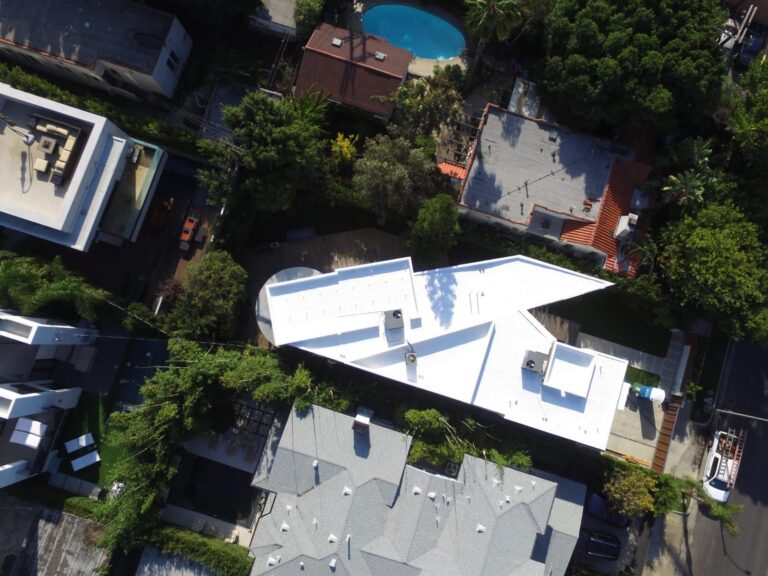
A complete polyurethane foam roof on a new or fully torn-off roof deck, built up to drain and coated.
Best for: new builds and full replacements
Ocean Seven project

Where the existing roof is sound and dry, foam can be applied over it after preparation, avoiding a full tear-off.
Best for: sound roofs with surface wear
Ocean Seven project

A worn coating is cleaned, repaired and re-coated, which protects the foam and extends the roof’s life.
Best for: existing foam roofs
Ocean Seven project

Foam follows curves, vaults and irregular shapes where sheet materials struggle to seal.
Best for: barrel vaults and unusual shapes
Ocean Seven project
How it works
How a flat roofing project runs.
Five clear steps from the first inspection to the final walkthrough, so you always know what happens next.
Inspection
We check the surface, drainage, edges, penetrations and decking, and photograph what we find.
Recommendation & proposal
We explain whether to repair, re-coat, apply foam over the existing roof or tear off, in a fixed, line-item proposal.
Scheduling
Foam is applied in dry, suitable weather, so we schedule around the forecast and any permit needs.
Preparation & application
Our crew prepares the roof, sprays the foam, builds up low areas and applies the coating.
Final walkthrough
We check drainage and finish with you, then hand over the warranty and maintenance information.
Planning your budget
What affects the cost of a flat roof.
Every flat roof is different, so we price each one after inspecting it. These are the main cost factors.
Roof area
Foam roofs are priced by area, so larger roofs need more material.
Existing roof condition
A sound roof can often be covered; a wet or failed roof must be removed first.
Drainage corrections
Building up low areas to stop ponding adds foam in those zones.
Foam thickness and coating
Thicker foam and heavier coating systems add insulation and protection.
Penetrations and equipment
HVAC curbs, vents, skylights and solar mounts add detail work.
Access
Height, access to the roof and protecting nearby surfaces affect setup time.
How we price it: you receive a fixed, line-item proposal after the inspection. Foam roofs also need periodic re-coating, and we explain that maintenance up front so you can plan for it.
Why Ocean Seven
Why owners choose our top-rated flat roofing team.
Polyurethane foam is a specialist trade. These are the reasons homeowners and building owners trust us with it.
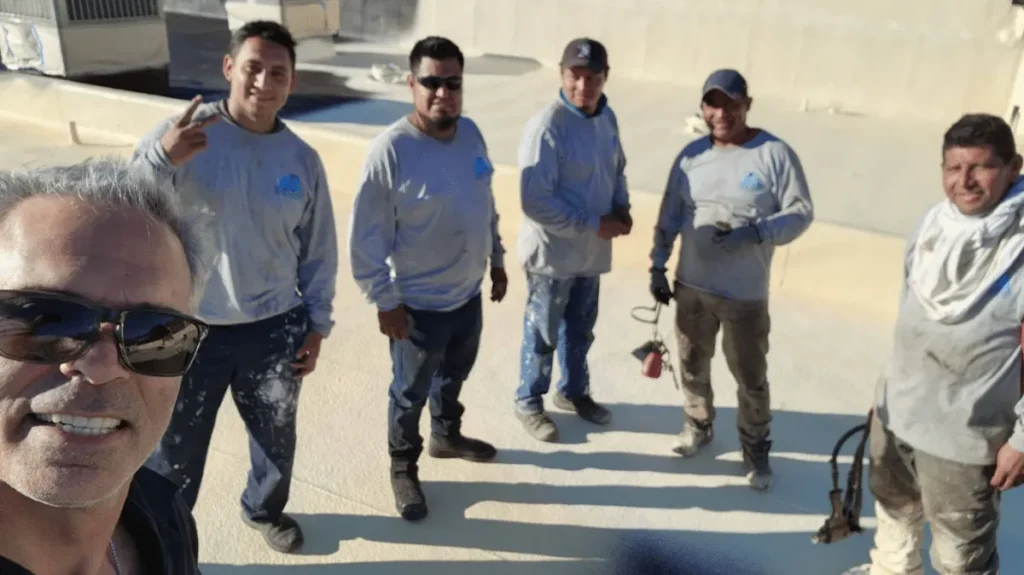
Foam is a core specialty
Many contractors subcontract foam roofing; we install it with our own crews.
Drainage built in
Low areas are built up during application, so the finished roof drains instead of ponding.
Honest assessment
If your roof can be re-coated or repaired, we say so before recommending more.
Licensed, bonded & insured
CSLB License #893048, B-General and C-39 Roofing. You can verify it with the Contractors State License Board.
What clients say
What clients say about working with us.
Selected excerpts from public Google and Yelp reviews of Ocean Seven Builders, quoted as written.
After looking at various roof choices and meeting many roofers, thank goodness I met Ron. He was really easy to deal with and explained everything really well. … He does not use subs, his people work for him.
Kenny MacPherson
Google review · Roof replacement
Really happy we chose Ocean Seven Builders for our roof replacement. Ron made the process easy from start to finish. He kept us updated, especially when there were small delays due to weather, which I appreciated.
Verena Marcos
Google review · Roof replacement
We met with a few companies before deciding, but Ron felt the most honest and straightforward. No weird sales pressure, just normal conversations and realistic expectations.
Noah Lopez
Google review · Room addition
Homeowner guides
Roofing guides for homeowners.
Reading before you work on a flat roof: flat roof leaks, repair or replace, and choosing the best roofing material.
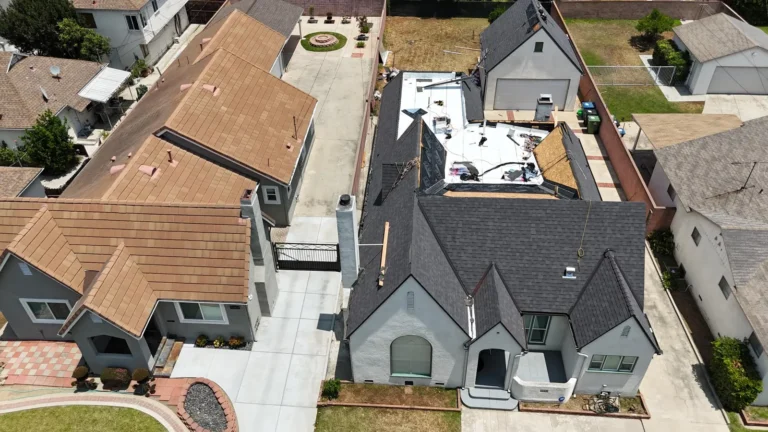
Roofing Guides
November 10, 2026

Roofing Guides
November 5, 2026
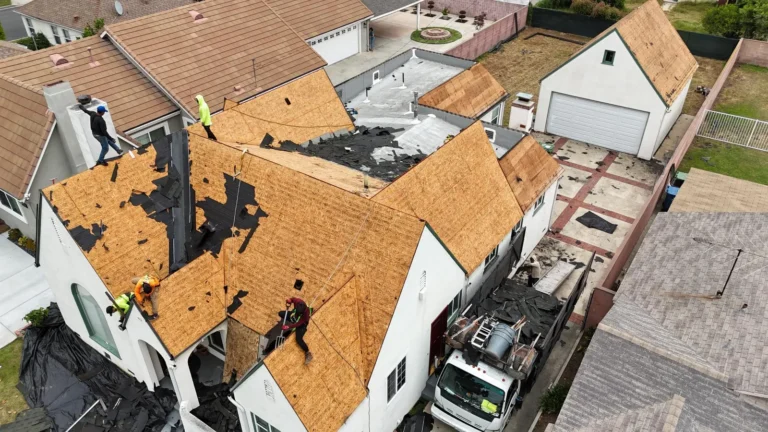
Roofing Guides
October 27, 2026
Roofing FAQ
Roofing questions, answered by professionals.
Repair or replace, which material, permits, leaks and warranties: straight answers from a roofing contractor that started as a roofing crew.
How do I know if my roof needs repair or replacement?
Isolated problems, such as a failed flashing or a small damaged area, can usually be repaired. However, when leaks keep returning, the underlayment has reached the end of its life, or the decking is soft in several places, replacement is normally the better long-term value. An inspection tells you which situation you are in. Learn more about roof repair and roof replacement.
What roofing materials do you install?
We install clay and concrete tile, architectural asphalt shingle, standing seam metal and seamless polyurethane spray foam for flat and low-slope roofs. Each suits a different roof shape and house style, so our guide to the best roof for Los Angeles homes and our page on roofing materials & options compare them.
What is a polyurethane foam roof?
Polyurethane foam is sprayed on as a liquid, expands into a seamless surface and is then protected with a coating. Because there are no seams to fail, it is well suited to flat and low-slope roofs where water would otherwise collect. It is the company’s roofing specialty.
How long does a roof replacement take?
It depends on the size of the roof, the system, the tear-off and the weather. As a guide, the company’s typical range for a polyurethane foam re-roof is two to five days. Your schedule is confirmed in the proposal after an inspection.
Do I need a permit to replace my roof?
In most Los Angeles-area cities, a roof replacement requires a permit and inspections. We coordinate the permit and inspections as part of the project. Our guide to home improvement permits in Los Angeles explains the process.
Can you find and fix a roof leak?
Yes. A ceiling stain is not always directly under the leak, because water travels along decking and framing first. We trace the source, which is often flashing, a roof penetration or a valley, and then repair it. See roof leak repair.
Do you offer roof inspections?
Yes. An inspection looks at the roof surface, flashing, penetrations, drainage and, where accessible, the decking and underlayment. It is also the first step before any repair or replacement proposal. See roof inspections.
Can you help with a roof insurance claim?
The company lists insurance claim work as part of its roofing service. We can inspect and document the damage and prepare a scope of repair. Coverage decisions, however, are made by your insurance company.
What happens if the wood under my roof is damaged?
Damaged decking is replaced before the new roof goes on, because a new roof is only as sound as what it is attached to. The proposal explains how decking replacement is handled so there are no surprises.
Can I switch from shingles to tile?
Often, yes. Tile is considerably heavier than shingle, though, so the roof framing has to be checked first and may need strengthening. We confirm this before you commit. Learn more about tile roofing and shingle roofing.
Do you work on flat and low-slope roofs?
Yes. Flat and low-slope roofs are a core part of the company’s roofing work, including seamless polyurethane foam systems. See flat & low-slope roofing.
What warranty comes with a new roof?
Every project carries a written workmanship warranty, along with the manufacturer’s warranty on the roofing system. Specific terms and periods are set out in your contract.
Where we work
Service areas across Los Angeles & beyond.
As a Los Angeles general contractor based in Van Nuys, we serve homeowners across Los Angeles County, Orange County, San Bernardino County and Marin County.
Los Angeles County
- Agoura Hills
- Alhambra
- Altadena
- Arleta
- Bel Air
- Beverly Glen
- Beverly Hills
- Brentwood
- Burbank
- Calabasas
- Canoga Park
- Cerritos
- Eagle Rock
- Encino
- Glendale
- Hawthorne
- Hidden Hills
- Highland Park
- Hollywood
- La Cañada Flintridge
- Lake Balboa
- Lakewood
- Malibu
- Manhattan Beach
- Marina del Rey
- Mission Hills
- Monrovia
- Newhall
- North Hollywood
- Panorama City
- Pasadena
- Redondo Beach
- Reseda
- San Gabriel
- Santa Monica
- Sherman Oaks
- Sierra Madre
- South Pasadena
- Studio City
- Tarzana
- Valley Glen
- Valley Village
- Van Nuys
- Venice
- West Hollywood
- Winnetka
- Woodland Hills
Orange County
San Bernardino County
Marin County
Ventura County
Riverside County
One office, not a network of branches. Everything runs out of 15155 Stagg St Unit # 2, Van Nuys, CA 91405. These are the areas our crews travel to; there is no branch office in any of them.
Homeowner guides
From the Ocean Seven blog.
Practical guides from a Los Angeles general contractor on roofing, additions, kitchens and permits, so you can plan your project with confidence.

New Construction Guides
November 15, 2026

Room Addition Guides
November 13, 2026

Bathroom Remodeling Guides
November 12, 2026
Start your project
Talk with a Los Angeles general contractor.
Tell us roughly what you have in mind. Then we will come out, measure, listen and send a fixed line-item proposal, free and with no pressure attached.
Phone
Office
Ocean Seven Builders, Inc.
15155 Stagg St Unit # 2
Van Nuys, CA 91405
Get directions
Hours
Monday–Friday 7:00am–7:00pm
Saturday 8:00am–4:00pm · Sunday closed
License
CSLB #893048 · B-General · C-39 Roofing
Licensed, bonded & insured
Request a consultation
Six quick fields. A sentence or two about the project is plenty.