
Top-rated roof repair · 4.9 on Google
Professional Roof
Repair Services
Ocean Seven Builders provides professional roof repair services for tile, shingle, metal and flat roofs. We find the real cause of the damage, repair it properly and tell you honestly how much life the rest of the roof has left.
- Licensed & insured · CSLB #893048 · B-General · C-39 Roofing
- In-house roofing crews
- Honest repair-first advice

Detail work around rooftop curbs on an Ocean Seven project
Roof repair
Professional roof repair that fixes the cause, not the symptom.
Most roofs do not fail all at once. A few tiles crack, a flashing lifts at a wall, a seam opens on a flat roof or a vent boot dries out in the sun. Left alone, that small opening lets water into the underlayment and decking, and a repair that would have taken a few hours turns into a much larger job.
Our roof repair services start by finding where the problem really begins. Water often travels along the decking before it shows up on a ceiling, so the stain you see inside is rarely directly below the opening. Therefore, we inspect the roof surface, the flashing at every transition, the penetrations and the drainage, and we photograph what we find. Then we explain the repair in plain language and put it in a fixed, written proposal.
We also tell you when a repair is not the right answer. If the underlayment has worn out across the roof, or the decking is soft in several places, patching one spot will not stop the next leak. In that case a roof replacement is the better long-term value, and our guide to roof repair or replacement explains how to tell the difference.
- Tile, shingle, metal and flat roof repairs
- Flashing, vent and penetration repairs
- Damaged decking and underlayment replaced where needed
- Photos and a written proposal before work starts
Roof repair explained
A homeowner’s guide to professional roof repair.
Why leaks rarely appear where the damage is
Water that gets past the roofing does not always drip straight down. It runs along the underlayment, the decking and the rafters until it finds a joint or a low point, and only then does it show up on a ceiling. As a result, the stain in your living room may sit several feet away from the actual opening. A professional roof repair therefore starts on the roof itself, following the path of the water back to the source rather than patching the spot that happens to be above the stain.
The most common causes of roof damage
Most roof repairs come back to a handful of causes. Strong sun dries out sealants, pipe boots and the surface of shingles and flat roofs. Wind lifts shingles and loosens ridge and hip pieces. Foot traffic from other trades cracks tiles, especially around solar panels, antennas and HVAC equipment. Meanwhile, flashing at walls, chimneys and skylights loosens as the house moves. On flat roofs, ponding water and blocked drains are the usual culprits, and our article on flat roof leaks explains why.
When a repair is the right answer
A repair makes sense when the damage is limited to one area and the rest of the roof is in good condition. Typical examples include a handful of broken tiles, a failed flashing at one wall, a split vent boot, or a blister on an otherwise sound flat roof. In these cases, a careful repair restores the roof for a fraction of the cost of replacement, and there is no reason to spend more.
When repairs stop making sense
On the other hand, some roofs have simply reached the end of their life. If leaks keep returning in different places, the underlayment is brittle across the roof, or the decking is soft in several areas, each repair only buys a little time. At that point the repair bills add up, and a full roof replacement usually offers better value. We will show you the evidence with photos either way, so the decision is yours and it is an informed one.
Matching the existing roof
A good repair should be hard to spot from the ground. For tile roofs, we reuse sound tiles wherever possible and source matching profiles for broken ones. For shingle roofs, we match the style and color as closely as the available products allow, although older shingles fade over time, so a perfect match is not always possible. We will explain any visible difference before the work begins, so there are no surprises.
Preventing the next repair
Many roof repairs can be avoided with simple maintenance. Keep gutters, drains and scuppers clear, especially before the rainy season. Ask other trades to tell you when they have walked on the roof. Above all, have the roof checked after major storms or when it reaches the later part of its life. A professional roof inspection costs far less than repairing water damage inside the house.
Related roofing services
Talk with a professional
Get honest advice and a fixed, line-item proposal from a top-rated team.
When to call
Signs your roof needs a repair.
These are the most common signs that a section of the roof needs attention. Caught early, most of them are straightforward to repair.
Ceiling or wall stains
Brown rings or bubbling paint after rain mean water is getting past the roofing somewhere above.
Cracked or slipped tiles
Broken tiles expose the underlayment to sun and rain, which then wears out much faster.
Missing or lifted shingles
Wind can lift shingles and break the seal strip, leaving gaps where water can run under.
Loose or rusted flashing
Flashing at walls, chimneys and skylights is where most roofs leak first.
Cracked vent boots
Rubber pipe boots dry out and split in the sun, letting water run down the pipe into the attic.
Blisters or splits on a flat roof
Bubbles, cracks and open seams on a flat roof let water in wherever it ponds.
Clogged or damaged drains
Blocked scuppers and gutters push water back under the roof edge.
Daylight or damp in the attic
Light through the roof boards or damp insulation shows exactly where to look.
If water is coming in right now, see roof leak repair. Not sure what the roof needs? A roof inspection gives you a clear answer before any work is quoted.
What is included
What our roof repair services include.
A good repair is more than a patch. This is what goes into every roof repair we carry out, whatever the roofing material.

Penetrations and equipment curbs are where many repairs happen
Diagnosis on the roof
We trace the problem to its source, checking the surface, flashing, penetrations, drainage and, where accessible, the decking.
Photo documentation
You see what we see. Photos of the damage and the cause come with the proposal, so the recommendation is easy to understand.
Written repair proposal
A fixed, line-item proposal explains what will be repaired, which materials will be used and how any hidden damage will be handled.
Careful removal
Roofing around the damaged area is removed carefully, so sound tiles and shingles can be reused where possible.
Underlayment and decking repair
Wet or rotted decking is replaced and new underlayment is lapped correctly into the existing layers.
Flashing and sealing
New flashing, pipe boots and sealants are installed at the transitions that caused the problem.
Matching and cleanup
Replacement roofing is matched to the existing roof as closely as possible, and the site is cleaned before we leave.
Repair types
Roof repairs for every roofing system.
Each roofing material fails in its own way, so each one is repaired differently. These are the repairs we handle most often.
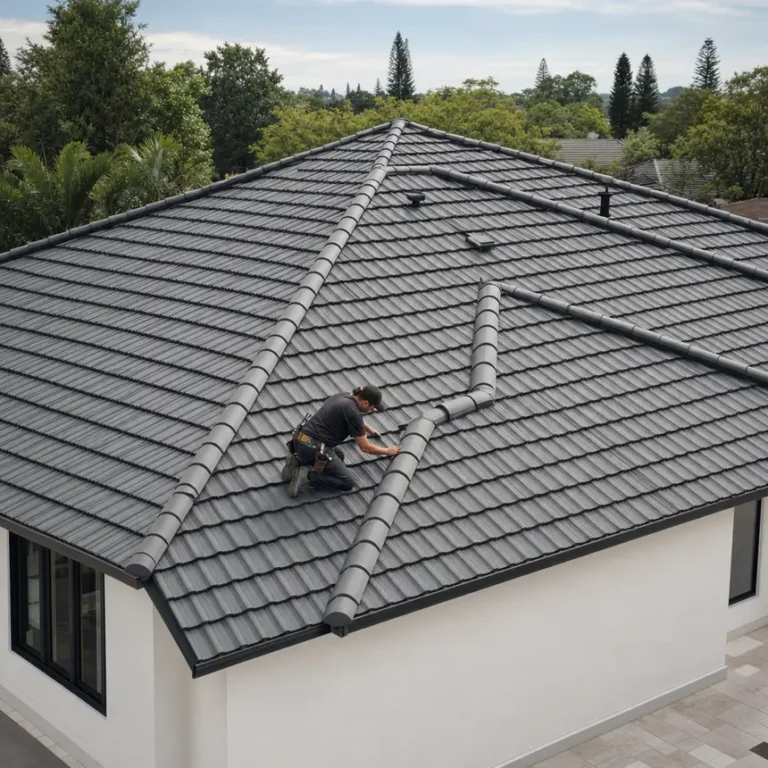
Cracked or slipped tiles are replaced and, where the underlayment beneath has worn out, it is renewed before the tiles are relaid.
Best for: clay and concrete tile roofs
Material reference image
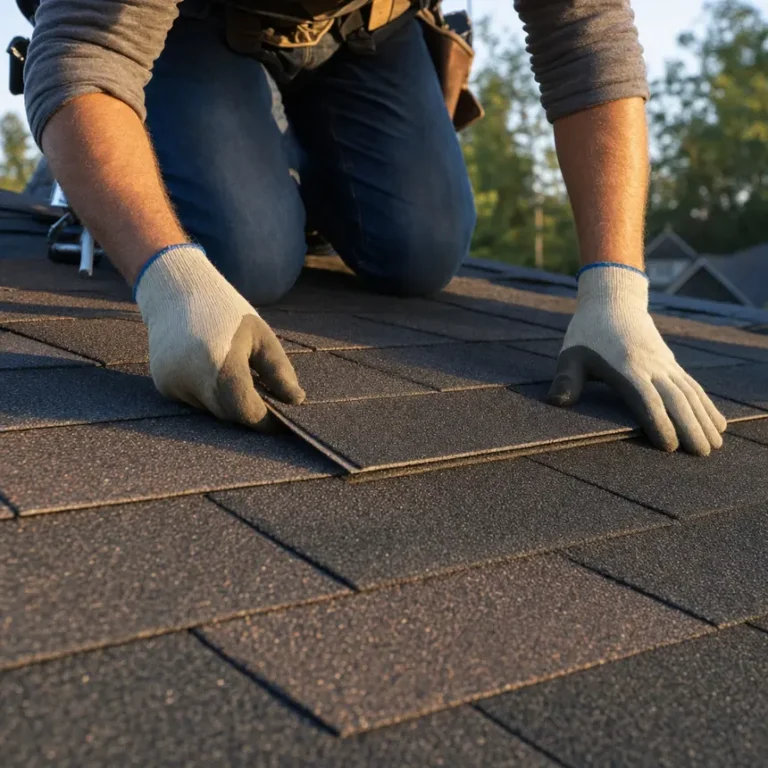
Lifted, cracked or missing shingles are replaced and resealed, and damaged underlayment or flashing is repaired at the same time.
Best for: pitched shingle roofs
Material reference image

Blisters, splits and failed seams are cut out and repaired, and foam roofs can be re-coated to protect the surface.
Best for: flat and low-slope roofs
Ocean Seven project

Walls, vents, skylights and equipment curbs are re-flashed and sealed, because that is where most leaks begin.
Best for: recurring leaks at one spot
Ocean Seven project
How it works
How a roof repair runs.
Five clear steps from your first call to the finished repair, so you always know what happens next.
Call & scheduling
Tell us what you are seeing. We schedule a visit and, if water is coming in, discuss temporary protection.
Inspection & photos
We inspect the roof, trace the cause and photograph the damage and the surrounding area.
Written proposal
You receive a fixed, line-item proposal for the repair, along with an honest view of the rest of the roof.
The repair
Our own crew carries out the repair, replacing decking, underlayment and flashing where needed, and cleans up afterwards.
Check & warranty
We check the finished repair with you and provide written warranty terms for the workmanship.
Planning your budget
What affects the cost of a roof repair.
We do not quote repairs without seeing the roof, because the cause decides the scope. These are the factors that drive the cost.
The cause of the damage
A cracked tile is a small job; failed underlayment or flashing beneath it is a larger one.
Size of the affected area
The more roof that has to be opened up, the more labor and material the repair needs.
Roofing material
Tile, shingle, metal and foam are repaired differently, and some materials are harder to match.
Hidden decking damage
Wet or rotted decking is only fully visible once the roofing is opened, so the proposal explains how it is handled.
Roof pitch and access
Steep roofs, tall homes and difficult access need more safety setup and time.
Flashing and penetrations
Chimneys, skylights, vents and equipment add detail work to many repairs.
How we price it: after inspecting the roof, we give you a fixed, line-item repair proposal. If the repair would cost a large share of a new roof, we will tell you, and explain how roof replacement compares.
Why Ocean Seven
Why homeowners choose our top-rated roof repair team.
Roof repair depends on honest diagnosis and careful detail work. These are the reasons homeowners trust us with both.

Repair-first advice
If a repair will solve the problem, we recommend the repair, not a new roof.
We find the real cause
Leaks are traced to their source, so the same stain does not come back next winter.
Our own roofers
The company began as a roofing crew, and the people on your roof work for us.
Licensed, bonded & insured
CSLB License #893048, B-General and C-39 Roofing. You can verify it with the Contractors State License Board.
What clients say
What homeowners say about working with us.
Selected excerpts from public Google and Yelp reviews of Ocean Seven Builders, quoted as written.
After looking at various roof choices and meeting many roofers, thank goodness I met Ron. He was really easy to deal with and explained everything really well. … He does not use subs, his people work for him.
Kenny MacPherson
Google review · Roof replacement
We met with a few companies before deciding, but Ron felt the most honest and straightforward. No weird sales pressure, just normal conversations and realistic expectations.
Noah Lopez
Google review · Room addition
Ron made the process easy from start to finish. He kept us updated, especially when there were small delays due to weather, which I appreciated. … No surprises on the final bill either, which is always a relief.
Verena Marcos
Google review · Roof replacement
Homeowner guides
Roofing guides for homeowners.
Reading before you repair a roof: repair or replace, flat roof leaks and choosing the best roofing material.
Roofing Guides
November 10, 2026

Roofing Guides
November 5, 2026
Roofing Guides
October 27, 2026
Roofing FAQ
Roofing questions, answered by professionals.
Repair or replace, which material, permits, leaks and warranties: straight answers from a roofing contractor that started as a roofing crew.
How do I know if my roof needs repair or replacement?
Isolated problems, such as a failed flashing or a small damaged area, can usually be repaired. However, when leaks keep returning, the underlayment has reached the end of its life, or the decking is soft in several places, replacement is normally the better long-term value. An inspection tells you which situation you are in. Learn more about roof repair and roof replacement.
What roofing materials do you install?
We install clay and concrete tile, architectural asphalt shingle, standing seam metal and seamless polyurethane spray foam for flat and low-slope roofs. Each suits a different roof shape and house style, so our guide to the best roof for Los Angeles homes and our page on roofing materials & options compare them.
What is a polyurethane foam roof?
Polyurethane foam is sprayed on as a liquid, expands into a seamless surface and is then protected with a coating. Because there are no seams to fail, it is well suited to flat and low-slope roofs where water would otherwise collect. It is the company’s roofing specialty.
How long does a roof replacement take?
It depends on the size of the roof, the system, the tear-off and the weather. As a guide, the company’s typical range for a polyurethane foam re-roof is two to five days. Your schedule is confirmed in the proposal after an inspection.
Do I need a permit to replace my roof?
In most Los Angeles-area cities, a roof replacement requires a permit and inspections. We coordinate the permit and inspections as part of the project. Our guide to home improvement permits in Los Angeles explains the process.
Can you find and fix a roof leak?
Yes. A ceiling stain is not always directly under the leak, because water travels along decking and framing first. We trace the source, which is often flashing, a roof penetration or a valley, and then repair it. See roof leak repair.
Do you offer roof inspections?
Yes. An inspection looks at the roof surface, flashing, penetrations, drainage and, where accessible, the decking and underlayment. It is also the first step before any repair or replacement proposal. See roof inspections.
Can you help with a roof insurance claim?
The company lists insurance claim work as part of its roofing service. We can inspect and document the damage and prepare a scope of repair. Coverage decisions, however, are made by your insurance company.
What happens if the wood under my roof is damaged?
Damaged decking is replaced before the new roof goes on, because a new roof is only as sound as what it is attached to. The proposal explains how decking replacement is handled so there are no surprises.
Can I switch from shingles to tile?
Often, yes. Tile is considerably heavier than shingle, though, so the roof framing has to be checked first and may need strengthening. We confirm this before you commit. Learn more about tile roofing and shingle roofing.
Do you work on flat and low-slope roofs?
Yes. Flat and low-slope roofs are a core part of the company’s roofing work, including seamless polyurethane foam systems. See flat & low-slope roofing.
What warranty comes with a new roof?
Every project carries a written workmanship warranty, along with the manufacturer’s warranty on the roofing system. Specific terms and periods are set out in your contract.
Where we work
Service areas across Los Angeles & beyond.
As a Los Angeles general contractor based in Van Nuys, we serve homeowners across Los Angeles County, Orange County, San Bernardino County and Marin County.
Los Angeles County
- Agoura Hills
- Alhambra
- Altadena
- Arleta
- Bel Air
- Beverly Glen
- Beverly Hills
- Brentwood
- Burbank
- Calabasas
- Canoga Park
- Cerritos
- Eagle Rock
- Encino
- Glendale
- Hawthorne
- Hidden Hills
- Highland Park
- Hollywood
- La Cañada Flintridge
- Lake Balboa
- Lakewood
- Malibu
- Manhattan Beach
- Marina del Rey
- Mission Hills
- Monrovia
- Newhall
- North Hollywood
- Panorama City
- Pasadena
- Redondo Beach
- Reseda
- San Gabriel
- Santa Monica
- Sherman Oaks
- Sierra Madre
- South Pasadena
- Studio City
- Tarzana
- Valley Glen
- Valley Village
- Van Nuys
- Venice
- West Hollywood
- Winnetka
- Woodland Hills
Orange County
San Bernardino County
Marin County
Ventura County
Riverside County
One office, not a network of branches. Everything runs out of 15155 Stagg St Unit # 2, Van Nuys, CA 91405. These are the areas our crews travel to; there is no branch office in any of them.
Homeowner guides
From the Ocean Seven blog.
Practical guides from a Los Angeles general contractor on roofing, additions, kitchens and permits, so you can plan your project with confidence.

New Construction Guides
November 15, 2026

Room Addition Guides
November 13, 2026

Bathroom Remodeling Guides
November 12, 2026
Start your project
Talk with a Los Angeles general contractor.
Tell us roughly what you have in mind. Then we will come out, measure, listen and send a fixed line-item proposal, free and with no pressure attached.
Phone
Office
Ocean Seven Builders, Inc.
15155 Stagg St Unit # 2
Van Nuys, CA 91405
Get directions
Hours
Monday–Friday 7:00am–7:00pm
Saturday 8:00am–4:00pm · Sunday closed
License
CSLB #893048 · B-General · C-39 Roofing
Licensed, bonded & insured
Request a consultation
Six quick fields. A sentence or two about the project is plenty.