
Short answer: once you’ve picked asphalt shingles, a new roof installation still has a specific layer order, deck, underlayment (with ice-and-water membrane at eaves and valleys where required), starter strip, field shingles, flashing, and a ridge vent and cap, and a set of decisions that have to be made before materials are ordered: shingle class and wind rating, underlayment type, ventilation approach, flashing metal, and the quantity and waste factor the order is based on. Getting the order right the first time avoids a second delivery truck and a delayed schedule.
If you haven’t settled on a roofing material yet, start with our guide to the best roof types for Los Angeles homes and come back here once shingles are the plan. This guide assumes asphalt shingles are the chosen roofing material and walks through what actually happens during new roof installation, layer by layer, and what belongs in your order before the crew shows up.

What “installation” covers once a material is chosen
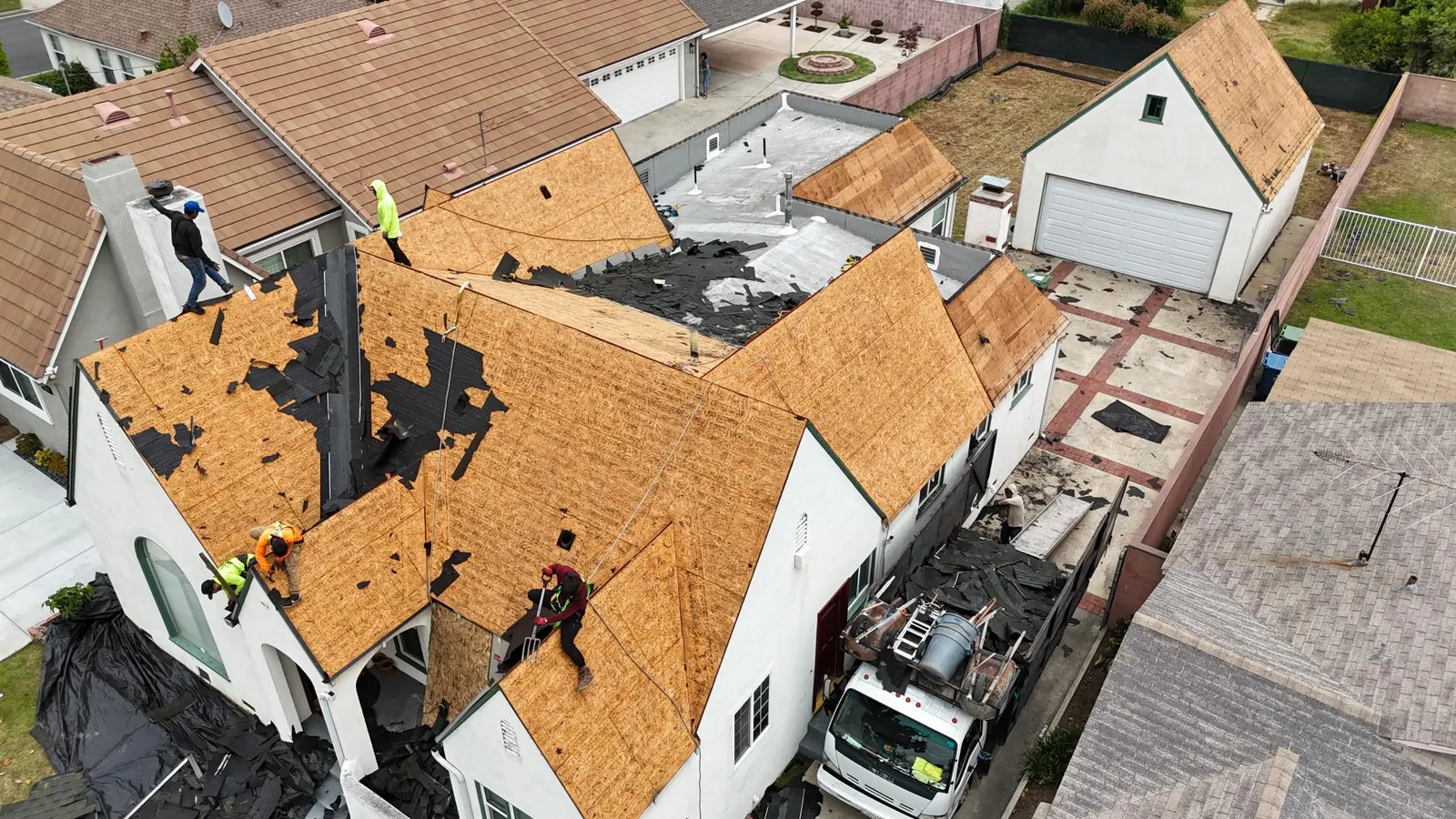
New roof installation is not just nailing shingles to a deck. It is a stack of layers, each doing a specific job, installed in a fixed order on top of a deck that has already been inspected and, where needed, repaired. (If you’re replacing an existing roof rather than building new, see our guide to roof decking replacement during a re-roof for how that first layer gets evaluated.) Manufacturers publish installation instructions for their shingle systems, and asphalt shingle installation nationally follows guidance published by the Asphalt Roofing Manufacturers Association (ARMA) alongside the International Residential Code’s roof assembly requirements.
The layers of a new shingle roof, deck to ridge
The table below lists the layers in the order they go on, and what each one is actually for.
| Layer | What it is | Purpose |
|---|---|---|
| Deck | Plywood or OSB sheathing, inspected and repaired before anything else goes on | The structural surface everything else is fastened to |
| Ice-and-water membrane | Self-adhered waterproof membrane at eaves, valleys and penetrations | Backup protection where water is most likely to back up or collect |
| Underlayment | Synthetic or felt sheet covering the remaining deck | Secondary water barrier under the shingles |
| Starter strip | Adhesive starter shingles along eaves and rakes | Seals the first course and resists wind uplift at the edges |
| Field shingles | The visible shingle courses, installed with a specified exposure and nailing pattern | Primary weather surface and the roof’s appearance |
| Flashing | Metal at valleys, walls, chimneys and roof penetrations (step flashing, pipe boots) | Seals transitions and penetrations shingles alone cannot seal |
| Ridge vent and cap | Ventilation strip at the ridge, covered with matching cap shingles | Exhaust airflow and the finished ridge line |

Decisions to settle before you order materials
Several choices determine what actually gets ordered, and changing them mid-project usually means a second delivery and a schedule delay. The comparison below outlines common shingle tiers and what tends to differ between them; specific products and warranties vary by manufacturer.
| Decision | Typical options | Why it matters before ordering |
|---|---|---|
| Shingle class | 3-tab, architectural/dimensional, or impact-rated (Class 4) | Different weight, wind rating and appearance; priced and packaged differently |
| Underlayment type | Felt or synthetic; ice-and-water membrane at eaves/valleys | Some manufacturer warranties require specific underlayment to stay valid |
| Ventilation approach | Ridge vent with soffit intake, or alternative exhaust vents | Intake and exhaust have to be balanced; affects attic temperature and shingle life |
| Flashing metal | Galvanized steel, aluminum or copper | Affects durability and how it reads against the roof color |
| Warranty tier | Standard manufacturer warranty vs. a full system warranty | A system warranty typically requires matched components from one manufacturer, which limits mixing products |
| Quantity and waste factor | Calculated from roof squares plus a waste percentage for cuts and hips/valleys | Ordering short means a second delivery; ordering long wastes material and budget |
Video transcript
Layer one: the deck. Every other layer in a new roof installation is fastened to or laid over the wood deck.
Underlayment, then staged shingles. Synthetic underlayment goes over the deck before the field shingles are installed.
The finished roof. Shingles on the steep slopes, membrane on the low-slope section, ready for final inspection.
Decisions happen before any of this is ordered. Shingle class, underlayment type and ventilation are chosen before materials are delivered.
Planning a project? Call Ocean Seven Builders at (310) 903-7869, or visit oceansevenbuilders.com.
Why shingle class and ventilation affect more than looks
Shingle class is not only a price tier. 3-tab shingles are the lightest and least expensive option, architectural (dimensional) shingles add a second layer of material for a heavier, more textured look and generally a longer manufacturer warranty, and impact-rated (Class 4) shingles are tested to resist hail and debris damage, which can matter for insurance pricing in some markets. The class you choose affects the weight the deck carries, the nailing pattern the manufacturer specifies, and how many bundles cover a roofing square, all of which feed the material order.
Ventilation is easy to treat as an afterthought, but intake and exhaust have to be balanced for a ridge vent system to actually move air. Soffit vents at the eaves pull cooler air in, and the ridge vent lets hot, moist attic air out; if soffit intake is blocked or undersized, a ridge vent can underperform or, in some conditions, pull air from the wrong path entirely. Attics that run hot in summer and damp in winter shorten shingle life from the underside, which is part of why ventilation is a roof-installation decision and not just an attic one. A straightforward way to check your own roof’s balance: if the attic feels noticeably hotter than outdoor shade temperature on a sunny day, intake or exhaust is likely undersized for the space.
Flashing metal is a smaller line item but still worth specifying. Galvanized steel is the common, economical choice; aluminum resists corrosion well in most inland conditions; copper costs more but can last the life of the roof and is sometimes chosen to match existing architectural metal. Whichever metal is used, step flashing at walls and valley flashing should be new, not reused from the old roof, since reused flashing is a common source of early leaks on an otherwise well-installed roof.
How Ocean Seven approaches a new roof installation
- Deck inspection. The existing or new deck is confirmed sound and properly fastened before any layer goes on top of it.
- Ice-and-water membrane and underlayment. Eaves, valleys and penetrations get membrane first, then the rest of the deck is covered with underlayment.
- Starter strip and field shingles. Starter shingles seal the edges, then field shingles are installed with the exposure and nailing pattern the manufacturer specifies.
- Flashing. Valleys, walls, chimneys and penetrations are flashed as the courses reach them, not patched in afterward.
- Ridge vent and cap. Ventilation is cut and installed at the ridge, then covered with matching cap shingles.
- Final inspection and cleanup. The finished roof is inspected as required by the local building department, and the site is cleared of debris and fasteners.
Homeowner checklist before you order: confirm the shingle class and manufacturer, whether the warranty is a standard product warranty or a full system warranty, where ice-and-water membrane is required, the ventilation plan, and how the quantity and waste factor were calculated. Ask to see the math behind the order, not just a total.
Permits and scheduling
New roof installation generally requires a permit and inspection from the city or county building department that covers your address. Calabasas and most Los Angeles-area cities run their own building and safety divisions separate from the City of Los Angeles, so permit timelines and inspection scheduling should be confirmed for your specific city. Weather and delivery lead times for your specific shingle class and color can also affect scheduling, especially for less common colors or impact-rated products.
Why homeowners choose Ocean Seven for new roof installation
Ocean Seven Builders is a family-owned general contractor based in Van Nuys with over 30 years of industry experience, operating as Ocean Seven Builders since 2007. Roofing is one of our core trades alongside remodeling, room additions and new construction, and we install shingle, tile, metal and low-slope systems. We offer online estimates, our team works in English and Spanish, and we serve homeowners across Los Angeles County, including Calabasas and the surrounding San Fernando Valley.
Frequently asked questions
When does a full new roof installation make sense?
When the existing roof is beyond the point repair makes sense, when you’re changing roof coverings entirely, or on new construction. See our guide to roof repair or replacement if you’re still deciding.
What should a Calabasas homeowner confirm before planning a new roof?
Confirm which building department has jurisdiction (Calabasas runs its own building and safety division), whether your HOA has roofing material or color restrictions, and that your proposal names the specific shingle class and underlayment being ordered.
What scope and material decisions should be settled before ordering?
Shingle class and manufacturer, underlayment type, ventilation approach, flashing metal, warranty tier, and the quantity and waste factor the order is based on.
Which site conditions can change the installation?
Deck condition discovered at tear-off, unusual roof geometry (multiple valleys, dormers, low-slope sections), and existing ventilation that doesn’t meet current intake/exhaust balance can all change scope once work starts.
What should be included in the written proposal?
The specific shingle product and class, underlayment type and where ice-and-water membrane is included, ventilation plan, warranty tier (standard vs. system), and who pulls the permit.
Do I need a permit for a new roof installation?
Generally yes. Most California cities, including Calabasas, require a permit and inspection for roof installation. Your contractor should confirm the requirements and handle the permit as part of the scope.
Sources and further reading
- International Code Council, International Residential Code, Chapter 9: Roof Assemblies.
- Asphalt Roofing Manufacturers Association, installation and technical resources.
- APA, The Engineered Wood Association, roof sheathing resources and installation recommendations.
- California Contractors State License Board, guidance on hiring a contractor. Ocean Seven Builders is a licensed California contractor, CSLB #893048 (B General Building, C-39 Roofing).
What homeowners say on Google
4.9 out of 5 from 33 Google reviews (as shown on Google, November 9, 2026)
Our home needed a new roof badly, and while we were already remodeling, we decided to update the master bathroom too. Ocean Seven Builders handled both projects and did an incredible job. Ron coordinated everything so well that we never felt overwhelmed even with two major projects happening together. The bathroom d...
Ocean Seven Builders did an amazing job replacing our asphalt shingle roof. We had been putting this project off for years because we were worried it would turn into a stressful mess, but Ron made the process simple from start to finish. He was patient while we compared shingle colors and answered every little quest...
Super happy we went with Ocean Seven Builders for our addition project. We met with a few companies before deciding, but Ron felt the most honest and straightforward. No weird sales pressure, just normal conversations and realistic expectations. The project stayed pretty close to schedule and the quality of the work...
Request a consultation
Tell us about your project. We reply by phone or email, or call (310) 903-7869.