
Short answer: a roof repair should start with the spot the homeowner actually called about, but it should never end there. A proper repair visit checks the full roof plane the damage sits on, any attached low-slope sections like a garage or porch roof, and the decking underneath the repair area itself, because flashing, vents and valleys fail in predictable places and a single leak is often a symptom of a wider pattern rather than an isolated accident. The goal is a scope that is honest in both directions: it should not quietly skip a related problem one slope over, and it should not pad a simple patch into unnecessary extra work. What belongs in that scope, and what doesn’t, is usually settled by a short inspection and a written proposal before any work starts.
Most homeowners contact a roofing contractor because of one visible problem: a stain on a ceiling, a missing shingle after wind, a leak around a skylight. The question this guide answers is different from deciding whether to repair or replace an entire roof, which we cover in our roof repair or replacement guide. Here, the homeowner has already decided a repair makes sense; the open question is how much of the roof that repair should actually cover once an inspector is up there.
Why a repair call should include a full-roof look
Asphalt shingle roofs fail in a handful of predictable places: flashing around chimneys and skylights, pipe boots and vents, valleys where two roof planes meet, and the ridge and hip caps exposed to the most sun and wind. A leak reported in one room often traces back to one of these details rather than to the shingle field itself, and the same detail frequently exists in more than one place on the roof. A roof repair that only addresses the exact spot a homeowner points to can miss a second vent boot that is a season away from failing the same way. That is why a repair estimate that is worth signing starts with the full roof, not just the complaint.
Isolating the right amount of scope
The flip side matters just as much: not every roof with one bad flashing detail needs a broader scope. A repair estimate that turns a single cracked pipe boot into a recommendation for a full re-roof, without photos or a specific reason, is padding the job rather than scoping it accurately. The distinction between a contractor doing a thorough inspection and one inflating a repair comes down to documentation. A legitimate wider scope is backed by photos of the additional problem areas, a specific explanation of what was found and where, and a price broken out so the homeowner can see what each additional item covers.
| What the homeowner reports | What a full inspection should confirm | Likely scope |
|---|---|---|
| One active leak near a vent, skylight or chimney | Condition of that single flashing detail and the decking directly beneath it | Isolated flashing and decking repair at that location |
| A few shingles missing or lifted after wind | Whether surrounding shingles are also loosened, and whether the exposed underlayment held | Localized shingle and underlayment patch |
| Granule loss, curling or cracking across one slope | Shingle age and condition on that slope compared to the rest of the roof | Slope-specific repair or recommendation to plan replacement for that section |
| Multiple past patches or stains in different rooms | Whether separate leaks share a common cause, such as age or a recurring detail | Multi-point repair, with a written explanation for each additional item |
What the decking tells an inspector
Pulling back shingles and underlayment at the repair site is what actually confirms the scope, because the decking underneath shows whether water damage stopped at the surface or reached the wood. Sound decking that is dry and solid to the touch means the repair can stay limited to flashing, underlayment and shingles at that spot. Soft, delaminated or darkened plywood or boards means the repair has to include replacing that section of decking before anything is reinstalled over it, since nailing new shingles to compromised wood does not hold. This is also where a repair can honestly expand without becoming padding: a few square feet of damaged decking found under an active leak is a specific, photographable reason, not a general upsell.
Video transcript
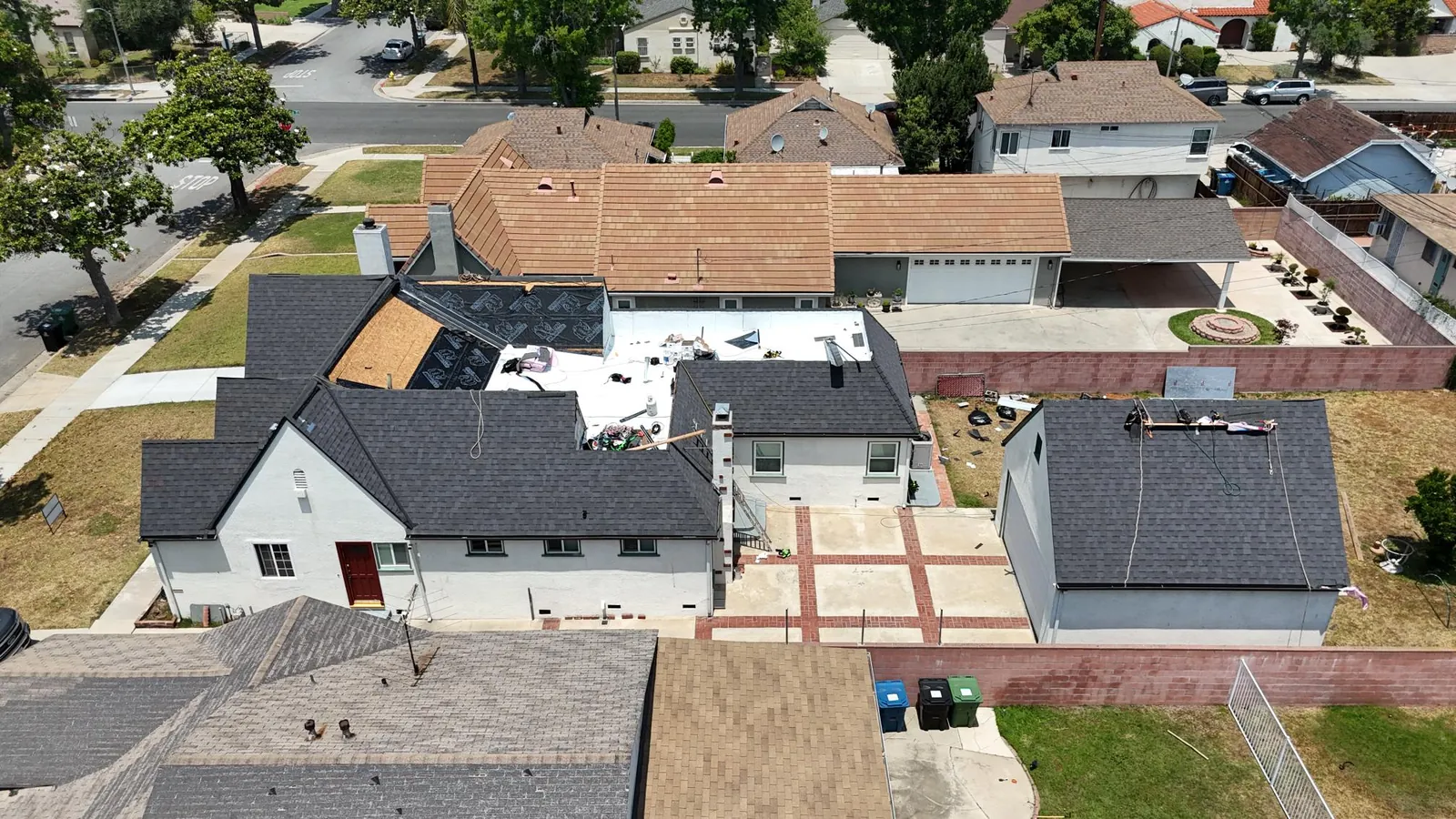
A full roof check, not just the leak. Inspecting the whole roof, including a low-slope section like this garage roof, before scoping a repair.
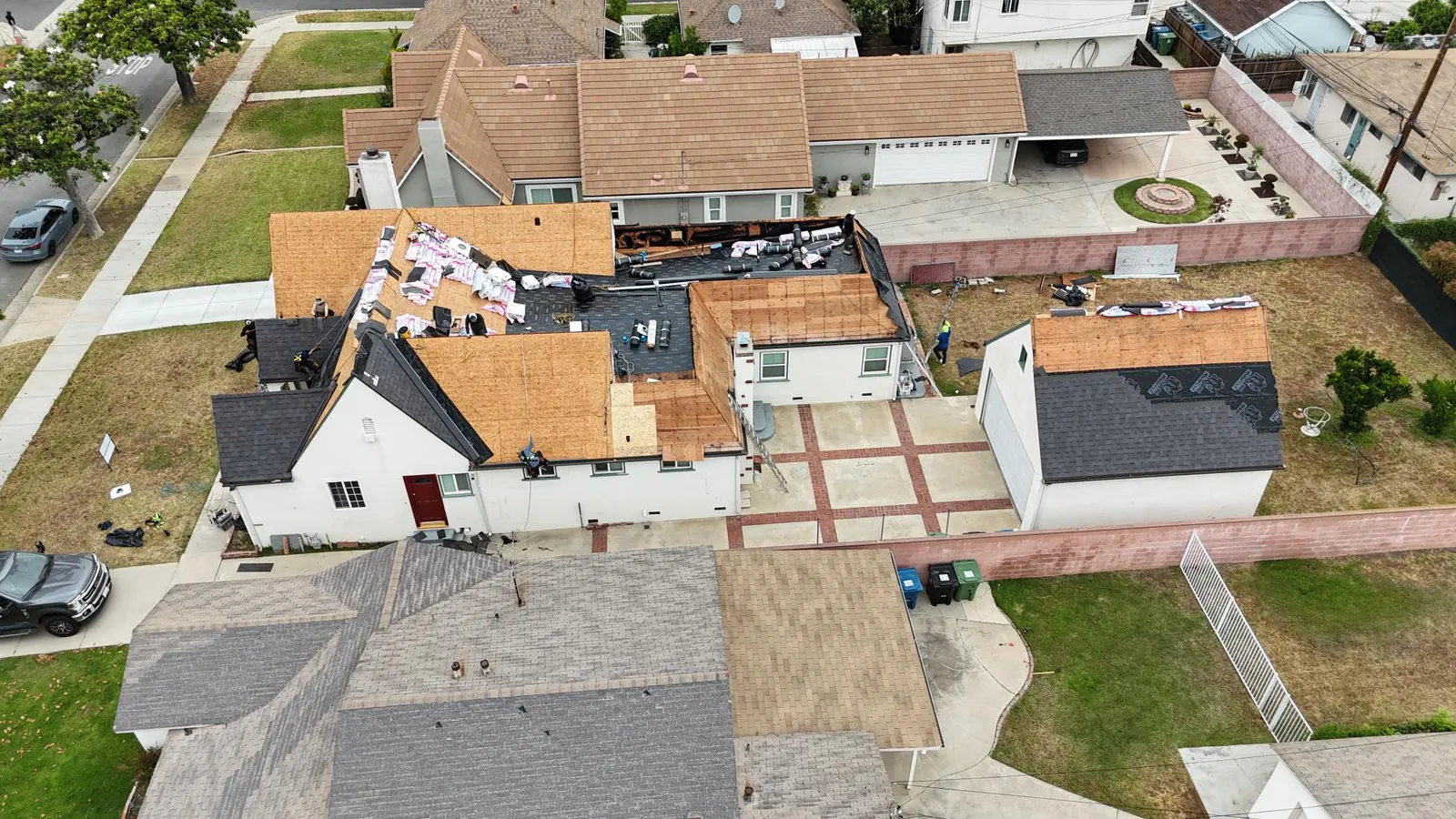
What's staged once the scope is confirmed. New decking, underlayment and shingle bundles staged for a repair that grew beyond the original call.
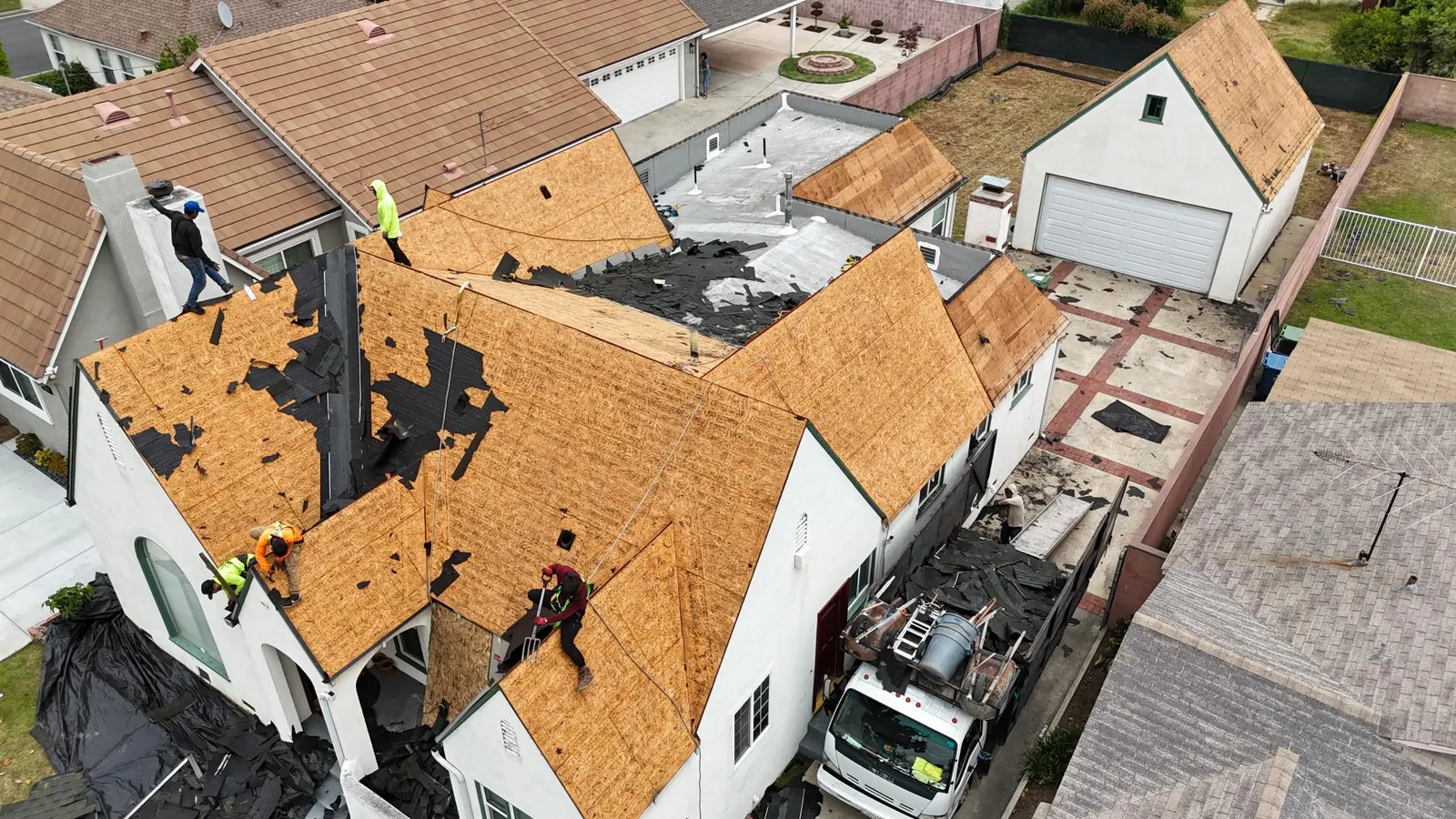
Checking the deck at the repair site. Pulling back roofing to see the wood underneath before deciding what the repair should include.
Problems can hide on a different roof plane. A low-slope section like this garage roof can fail years before the main roof if it isn't checked too.
Planning a project? Call Ocean Seven Builders at (310) 903-7869, or visit oceansevenbuilders.com.
Site conditions that can change the scope
A handful of conditions tend to change what a repair actually requires once a crew is on the roof. Skip sheathing, the spaced wood boards found under some older shake or shingle roofs, cannot always take a standard repair patch and may need solid sheathing added at the repair area first. Multiple roof layers from a past overlay can hide the true condition of the original roof until the top layer is pulled back. Low-slope sections, like a garage roof or a porch attached to a main pitched roof, use different materials and fail on a different timeline, which is why they belong in the same inspection even when the reported leak is somewhere else. Access, such as a steep pitch or a hard-to-reach valley, can also affect price without changing the physical scope of the repair itself.
Weather history matters too. A roof that has taken a recent windstorm or a run of heavy rain can show new, unrelated damage on top of an older, slow leak, and an inspection done right after a storm should note which problems look fresh and which look long-standing. This distinction can matter beyond the repair itself: if a homeowner later files an insurance claim for storm damage, dated photos that separate new damage from pre-existing wear make that claim easier to support. It is also why a repair scope written the same day as a storm should say so, rather than presenting every finding as if it had the same cause.
What drives the price of a repair
Once the scope is set, price follows from a few concrete factors rather than a flat per-roof number: the size of the area being repaired, the materials matched to the existing roof, how many separate problem areas were found, and access or safety requirements like steep pitch work or a second story. A roof with a single, easily reached flashing repair and a roof needing three isolated patches across different slopes are different jobs even if the total square footage sounds similar, which is why an itemized proposal is more useful to a homeowner than a single lump sum. Matching materials also affects price: a repair on an older roof may need discontinued or hard-to-match shingles, and a contractor should say so upfront rather than leaving a visibly different patch.
How Ocean Seven scopes a roof repair
- Confirm the reported problem. We inspect the exact spot a homeowner called about and document what caused it.
- Walk the full roof. Every slope and attached low-slope section gets checked, not only the area with the complaint.
- Check the decking at the repair site. Shingles and underlayment are pulled back at the problem area to confirm the wood underneath is sound.
- Document findings with photos. Anything beyond the original complaint is photographed and explained, not just added to the price.
- Separate confirmed items from optional ones. The written scope distinguishes what the inspection confirmed from anything we recommend watching or planning for later.
- Price and written proposal. Each item in the scope is priced individually so a homeowner can see what they are paying for.
Before you approve a repair scope: ask whether the full roof was inspected or only the reported area, request photos of any additional problems found, confirm whether the decking was checked and what it showed, and get each scope item priced separately rather than as one lump sum.
Why homeowners choose Ocean Seven for roof repair
Ocean Seven Builders is a family-owned general contractor based in Van Nuys with over 30 years of industry experience, operating as Ocean Seven Builders since 2007. Roofing is one of our core trades, and a repair call gets the same written, itemized proposal as a full re-roof: what was inspected, what was found, and what each line item covers. We offer online estimates, our team works in English and Spanish, and we repair and replace roofs for homeowners across Los Angeles and Orange County, including Beverly Glen.
Frequently asked questions
When does a roof repair make sense instead of a full replacement?
When the problem is isolated to specific details, like flashing, a vent boot or a section of shingles, and the rest of the roof is in reasonable condition for its age. If damage or wear is widespread across multiple slopes, repair becomes a short-term fix rather than a lasting one; see our guide on repair versus replacement for that decision.
What should a Beverly Glen homeowner confirm before planning a repair?
Beverly Glen is an unincorporated part of Los Angeles County, so permits for roofing work go through the County’s Public Works Building and Safety Division rather than a city building department. Confirm whether your specific repair needs a permit before work starts, and ask your contractor to handle that step.
What scope and inspection decisions should be settled first?
Whether the full roof was walked (not just the reported area), whether the decking at the repair site was checked, and which items are confirmed problems versus recommendations for the future. These should be written out, not left verbal.
Which site conditions can change the repair scope?
Skip sheathing under an older roof, multiple existing roof layers, low-slope sections like a garage or porch roof, and difficult access can all change what a repair requires once a crew is on the roof, sometimes before the shingles themselves are even touched.
What should be included in the written proposal?
A description of the inspection performed, photos of any problems beyond the original complaint, each scope item priced separately, and the materials being used for flashing, underlayment and shingles.
How long does a typical roof repair take?
Most isolated flashing or shingle repairs are completed in a single day. Repairs that include decking replacement or multiple problem areas can take longer, which is one more reason the scope should be confirmed in writing before work starts.
Sources and further reading
- Asphalt Roofing Manufacturers Association, asphalt roofing installation and maintenance resources.
- Los Angeles County Department of Public Works, Building and Safety Division, permits and services for unincorporated areas.
- California Contractors State License Board, guidance on hiring a contractor and reviewing contracts.
What homeowners say on Google
4.9 out of 5 from 33 Google reviews (as shown on Google, November 4, 2026)
Our home needed a new roof badly, and while we were already remodeling, we decided to update the master bathroom too. Ocean Seven Builders handled both projects and did an incredible job. Ron coordinated everything so well that we never felt overwhelmed even with two major projects happening together. The bathroom d...
Ocean Seven Builders did an amazing job replacing our asphalt shingle roof. We had been putting this project off for years because we were worried it would turn into a stressful mess, but Ron made the process simple from start to finish. He was patient while we compared shingle colors and answered every little quest...
Super happy we went with Ocean Seven Builders for our addition project. We met with a few companies before deciding, but Ron felt the most honest and straightforward. No weird sales pressure, just normal conversations and realistic expectations. The project stayed pretty close to schedule and the quality of the work...
Request a consultation
Tell us about your project. We reply by phone or email, or call (310) 903-7869.